




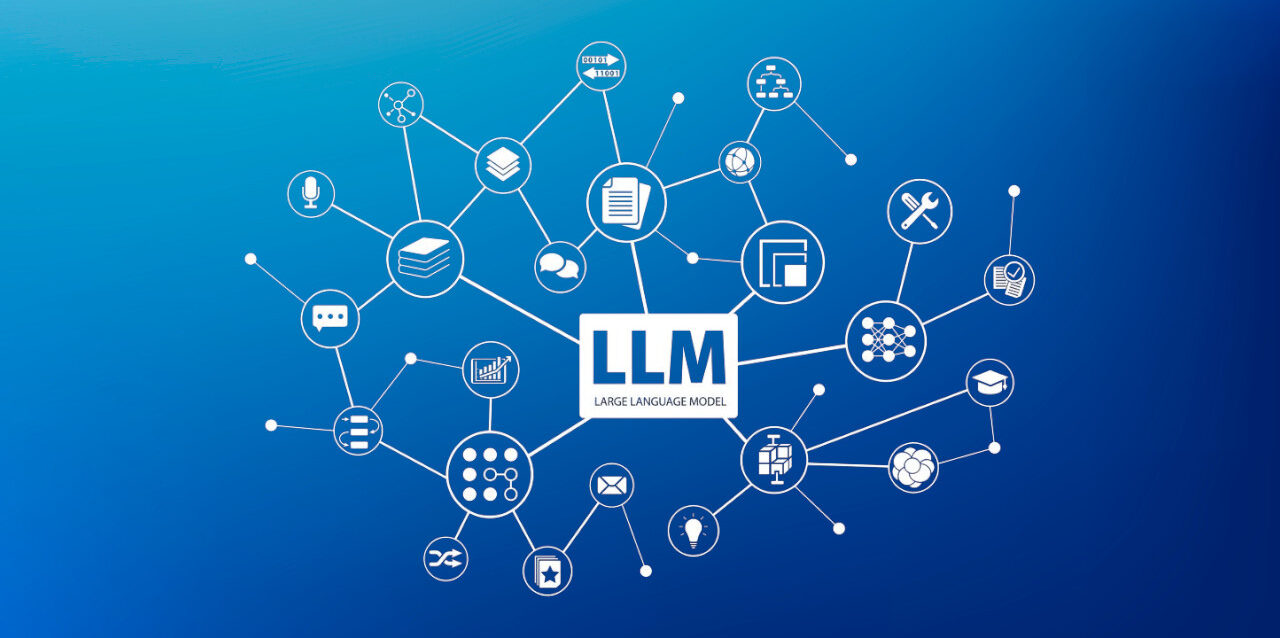
The Foundation: Transformer Architecture
At the heart of most modern LLMs lies the transformer architecture, introduced in thegroundbreaking 2017 paper “Attention Is All You Need.” This architecture fundamentally changed how we approach sequence-to-sequence tasks by introducing the concept of self-attention
mechanisms. The transformer consists of several key components:
1. Multi-Head Attention Mechanism
The attention mechanism allows the model to focus on different parts of the input sequence simultaneously. Unlike traditional recurrent neural networks that process sequences sequentially, transformers can examine all positions in parallel. Multi-head attention runs multiple attention mechanisms in parallel, each learning different types of relationships between words. For example, when processing the sentence “The cat sat on the mat,” one attention head might focus on the relationship between “cat” and “sat” (subject-verb relationship), while another might focus on “sat” and “mat” (verb-object relationship).
2. Position Encoding
Since transformers don’t inherently understand the order of words in a sequence, position encoding is added to give the model information about word positions. This can be done through learned embeddings or mathematical functions like sine and cosine waves.
3. Feed-Forward Networks
Each transformer layer contains a feed-forward neural network that processes the attention outputs. These networks apply non-linear transformations to help the model learn complex patterns and relationships.
4. Layer Normalization and Residual Connections
These components help stabilize training and allow information to flow effectively through deep networks. Residual connections enable the model to learn incremental improvements at each layer,while layer normalization ensures stable gradient flow.

Scaling Up: From Models to Large Language Models
The transition from standard language models to LLMs involved several key developments:
1. Parameter Scale
Modern LLMs contain billions or even trillions of parameters. GPT-3 has 175 billion parameters, while some recent models exceed 500 billion parameters. This massive scale allows the models to store and process vast amounts of linguistic knowledge.
2. Training Data
LLMs are trained on enormous datasets containing text from books, websites, academic papers, and other sources. This diverse training data helps the models develop broad knowledge across many domains and tasks.
3. Emergent Abilities
As models scale up, they develop emergent abilities that weren’t explicitly programmed, such as few-shot learning, chain-of-thought reasoning, and cross-lingual understanding.
Key Architectural Variations
Different LLM families have introduced various architectural innovations:
1. Decoder-Only Models (GPT Family)
These models use only the decoder part of the transformer, making them particularly good at text generation. They’re trained using causal language modeling, where the model learns to predict the next token in a sequence.
2. Encoder-Decoder Models (T5, BART)
These models use both encoder and decoder components, making them versatile for tasks that require understanding input and generating output, such as summarization or translation.
3. Encoder-Only Models (BERT Family)
These models excel at understanding and analyzing text but aren’t designed for generation. They use bidirectional attention to understand context from both directions.

Training Process and Techniques
1. Pre-training
LLMs undergo extensive pre-training on large text corpora using self-supervised learning. The model learns to predict masked words or next tokens, developing a deep understanding of language patterns, grammar, and world knowledge.
2. Fine-tuning
After pre-training, models are often fine-tuned on specific tasks or domains using supervised learning with labeled data. This specializes the model for particular applications while retaining general language understanding.
3. Reinforcement Learning from Human Feedback (RLHF)
Many modern LLMs incorporate RLHF during training, where human feedback is used to align the model’s outputs with human preferences and values. This technique has been crucial in developing helpful and harmless AI assistants.

Memory and Context Management:
One of the key challenges in LLM architecture is managing context and memory:
1. Context Windows
LLMs have a fixed context window that determines how much previous text they can consider when generating responses. Recent advances have extended these windows from a few thousand tokens to millions of tokens.
2. Attention Optimization
Various techniques like sparse attention, sliding window attention, and memory-efficient attention have been developed to handle long sequences more efficiently.
Hardware Considerations and Optimization
LLM architecture must consider computational constraints:
1. Parallelization
Transformer architectures are highly parallelizable, making them suitable for training and inference on modern GPU clusters.
2. Model Compression
Techniques like quantization, pruning, and knowledge distillation help reduce model size and computational requirements while maintaining performance.
3. Inference Optimization
Specialized architectures and techniques like key-value caching, batching, and model sharding optimize inference speed and throughput.
Future Directions
The field continues to evolve with several promising directions:
1. Multimodal Integration
Next-generation LLMs are incorporating vision, audio, and other modalities, creating more comprehensive AI systems.
2. Mixture of Experts (MoE)
This architecture allows models to scale parameters while maintaining computational efficiency by activating only relevant parts of the network for each input.
3. Retrieval-Augmented Generation (RAG)
Combining LLMs with external knowledge bases and retrieval systems to provide more accurate and up-to-date information.
Conclusion
The architecture of Large Language Models represents a remarkable achievement in artificial intelligence, combining theoretical insights from decades of research with practical engineering solutions for massive-scale computation. Understanding these architectural principles is crucial for anyone working with or developing AI systems. As the field continues to advance, we can expect
further innovations in model architecture, training techniques, and optimization methods. The future promises even more capable and efficient language models that will continue to transform how we interact with and benefit from artificial intelligence.